
Justice, Finance, and Public Participation in Vietnam’s JETP Three Years On
Overview
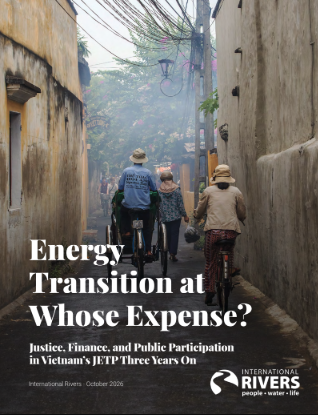
A just energy transition is only credible if it is just in practice, not only in name. Three years after Vietnam’s Just Energy Transition Partnership (JETP) was agreed, a new report from International Rivers, built on years of monitoring with the Vietnam Climate Defenders Coalition, finds a promising foundation but critically insufficient progress on justice, financing and public participation. Renewable energy targets have been raised and the first projects are moving to financing. But the USD 15.5 billion committed covers only around 11% of what is needed through 2030, and grants make up only about 2% of the total.
Without a detailed plan for workers and communities in coal-dependent regions, and with civic space severely restricted, the “just” in the JETP risks being crowded out by the logic of bankability.
Vietnam’s experience demonstrates what happens when attracting finance comes first and justice is left for later. The report’s recommendations are practical: upfront grant finance for what cannot generate commercial returns, independent monitoring and grievance mechanisms, protection for civil society and environmental human rights defenders, and finance tied to social outcomes, not only to megawatts. Justice must be built in from the start, and climate finance should be held to that standard.
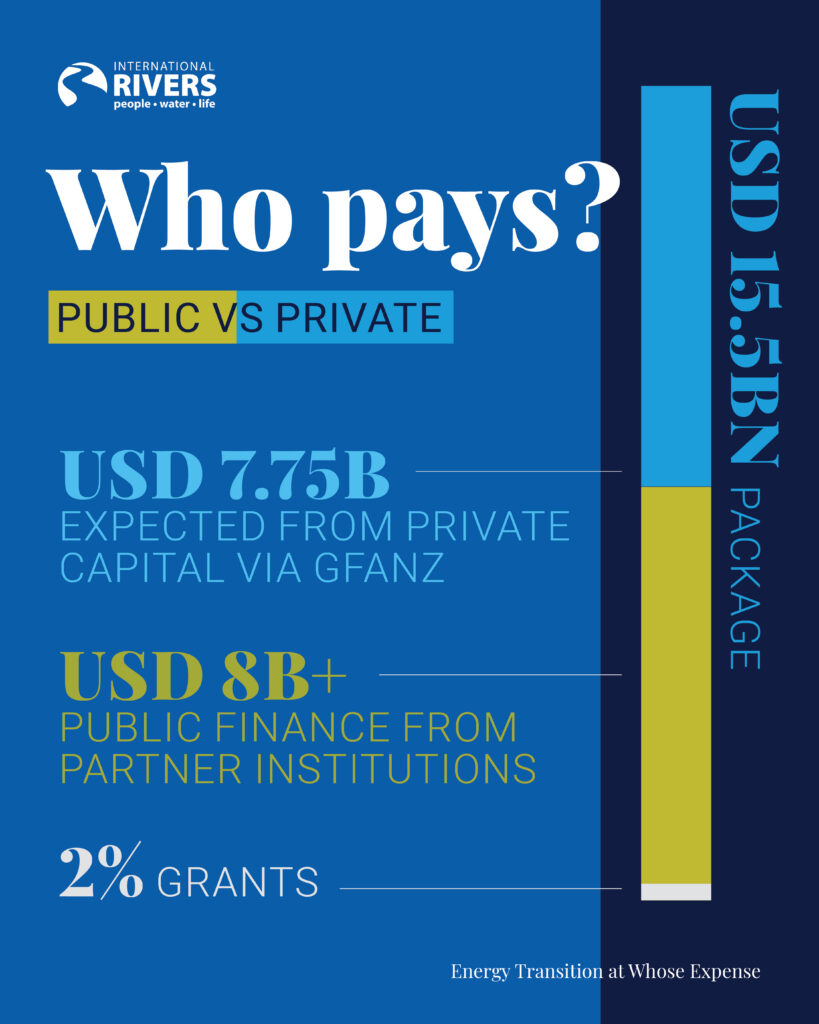
USD 15.5bn
in initial JETP commitments
~2%
of overall financing is grants (about 4% of public commitments)
USD 136.3bn
estimated for implementing near-term power plans through 2030,
rising to USD 699.1bn for 2031–2050
~11%
of the estimated USD 136.3bn needed for near-term power plans (2026–2030)
is covered by the JETP package
37
JETP-aligned projects identified and at least 44 proposed, with over USD 10bn in
investment needs
“A just transition is not an optional feature but a matter of justice, health, well-being, and rights for current and future generations.”

Civic space is closed
All six imprisoned climate and environmental defenders have been released, but their organizations remain closed or restructured, and new restrictive laws further constrain civil society. A revised plan sets out a more detailed “just transition” agenda on paper, but without public participation, affected communities cannot shape, monitor or challenge it.
The bankability trap
Grants still make up only around 2% of the JETP financing package, with the remainder largely market-rate or concessional loans. This risks crowding out the just transition in favor of bankable projects, and reducing JETPs to commercial finance rebranded as green. To investors, a bankable project is one that can pay its lenders, which says nothing about whether it is fair or just.
False solutions persist
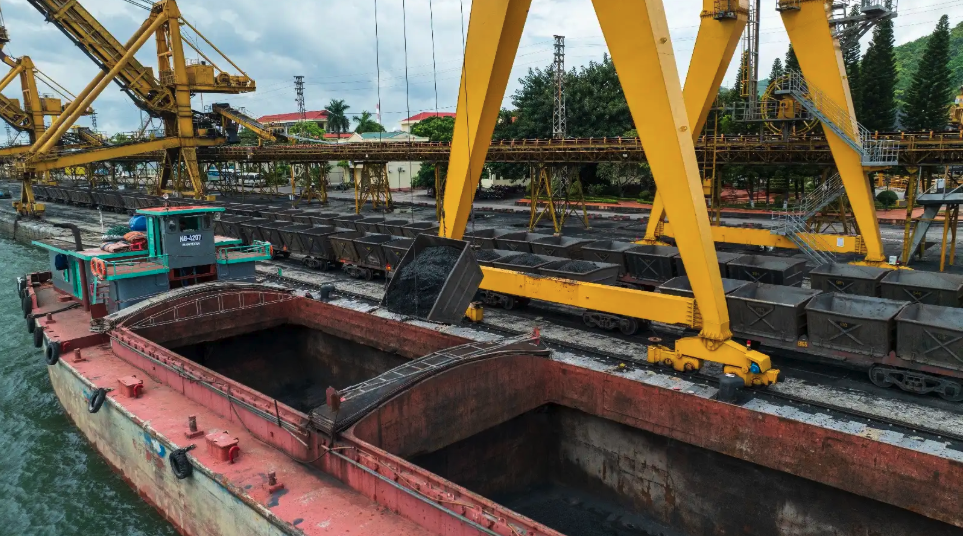
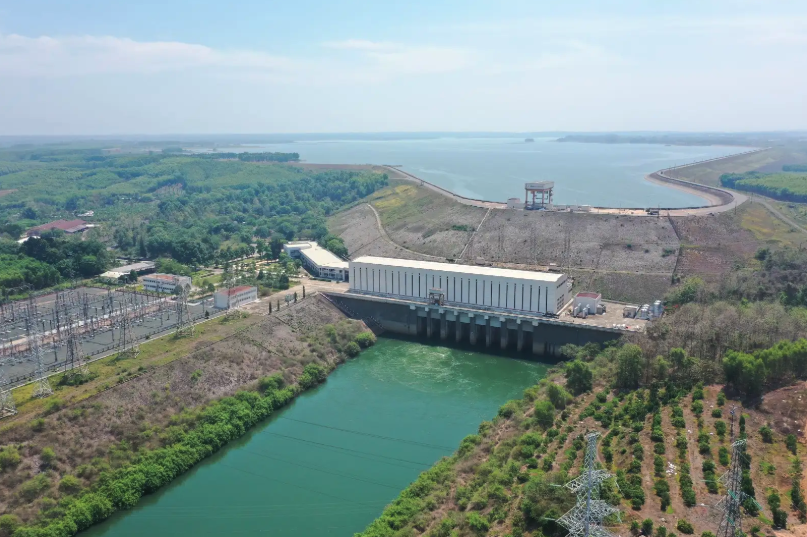
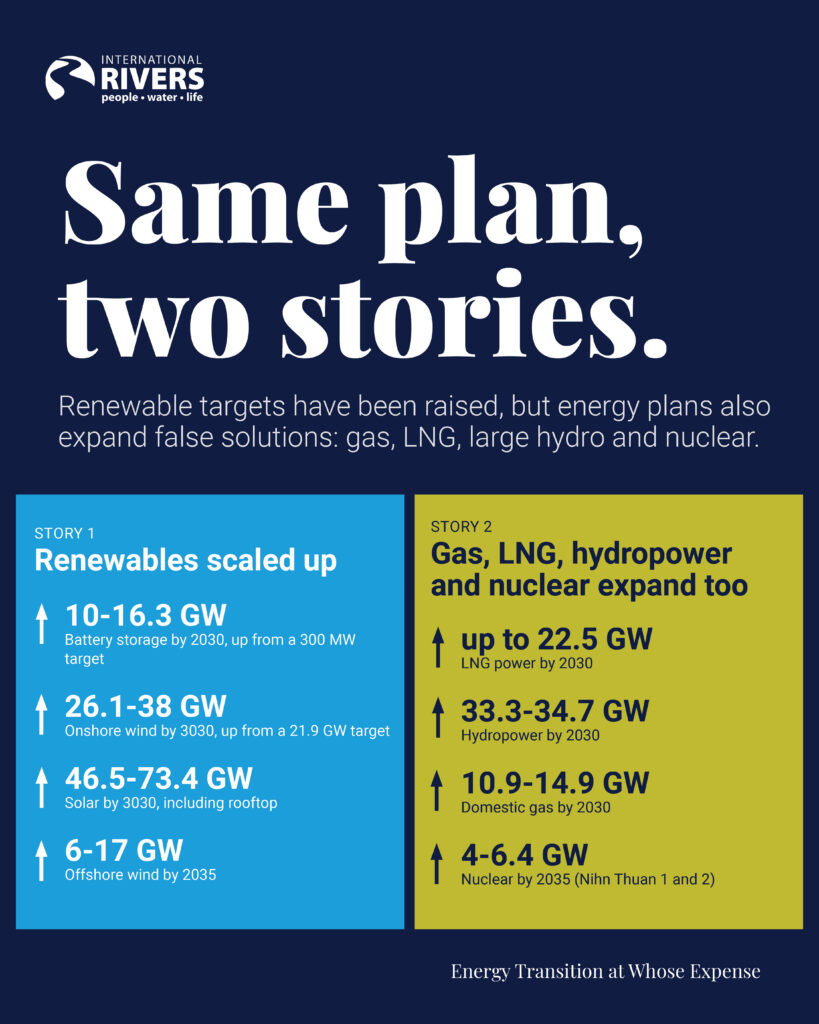
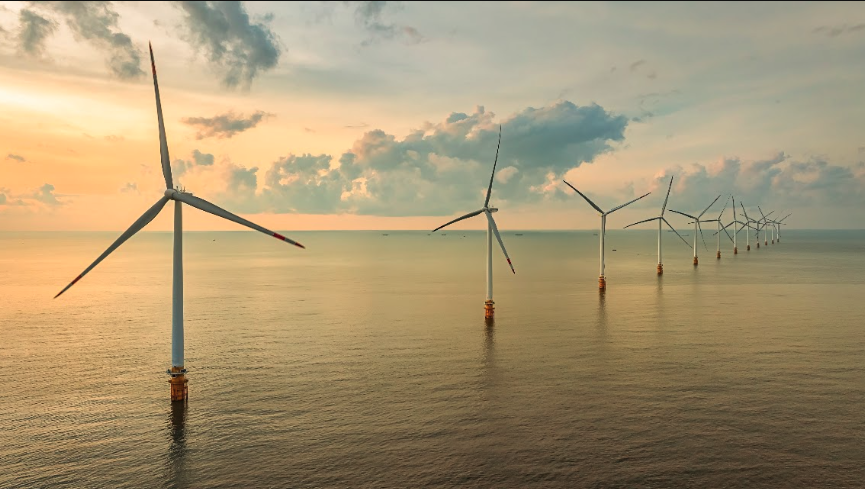
Despite the expansion of renewable targets in the revised power plan, the overall energy mix still leans heavily on fossil gas, deepens reliance on imported LNG and large hydropower, and introduces nuclear power.
Commitments need delivery
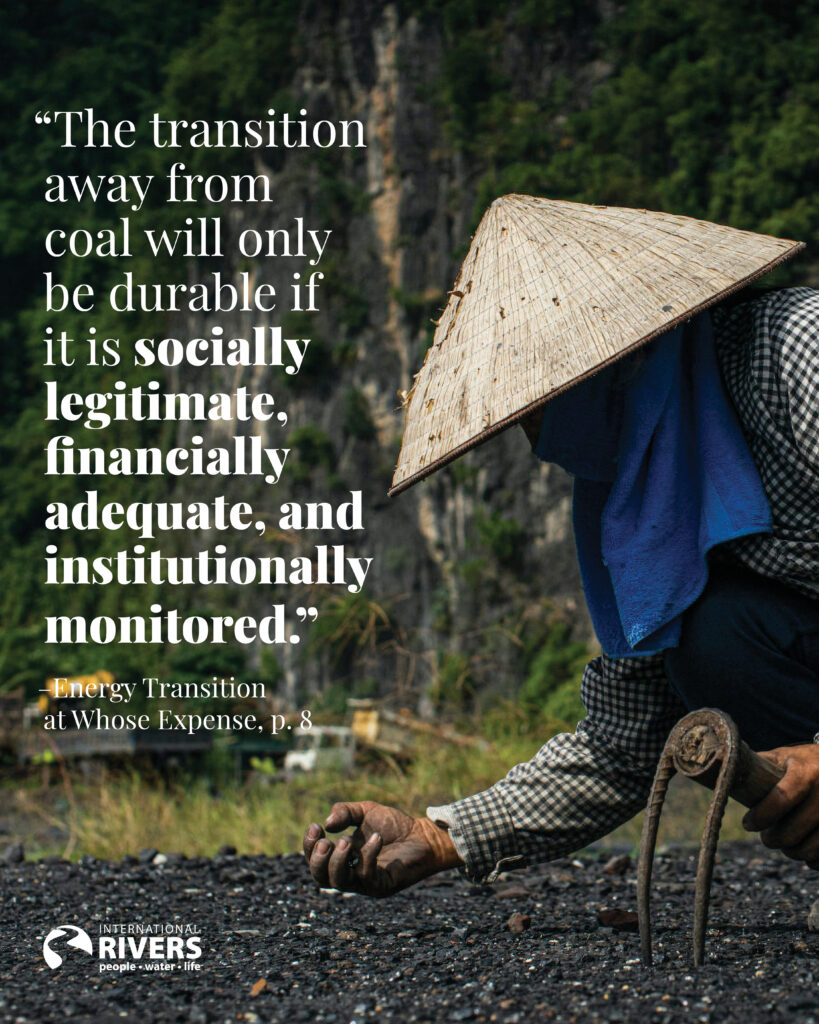
Vietnam has a general coal phase-out timeline but needs a more detailed plan, including specific commitments on worker retraining and support for vulnerable communities in coal-dependent regions and sectors, backed by concrete delivery mechanisms and dedicated financing.
Priority to growth over justice
The JETP Secretariat moved to the Ministry of Industry and Trade in 2025, a ministry oriented toward investment and growth rather than environmental or justice outcomes. This came amid a major restructuring that has cut the public workforce and opens room to reshuffle positions and influence.
Planning for people: Large centralized projects concentrate decision-making away from communities, who live with the consequences. Vietnam’s previous planning shows what is at stake, such as the large hydropower Son La Dam, which displaced more than 91,000 people, most of them from minority communities, depriving people of land and livelihoods without adequate compensation.
Benefits for those who need them most: For the first time, the revised JETP implementation plan builds the principle of “leave no one behind” into the transition framework, with commitments to social safety nets, retraining and career conversion for coal workers, and affordable, reliable electricity for everyone, not only those who can pay a premium. Delivering on it means projects that reach low-income households, rural communities and coal-dependent regions, with finance tied to measurable social outcomes, not only good intentions.
A critical role for civil society: Justice on paper means nothing if the people it is meant to protect cannot safely speak, organize or challenge decisions that affect their land, livelihoods or rivers. A just transition depends on independent civil society. Local researchers, experts and communities understand impacts on the ground, bring independent expertise on energy pathways and can monitor whether commitments are being met, but they need strong protections to do so safely.
1. Protect civic space
2. Rebalance the financing mix
3. Explore innovative financing mechanisms
4. Develop a comprehensive green investment taxonomy
5. Strengthen donor coordination
6. Institute safeguards and transparency
7. Establish a transparent project pipeline
8. Commit to a credible coal phase-out plan
For international partners:
- Coordinate political and financial leverage behind shared standards
- Protect and enable meaningful public participation
- Allocate dedicated grant financing for non-bankable just transition measures
- Ensure regionally tailored program design with local actors
- Foster transparent dialogue on financing instruments
For Vietnam’s policymakers:
- Ensure a detailed, feasible coal phase-out plan linked to funded social protections and worker transition measures
- Prioritize renewables scale-up over reliance on false solutions
- Link coal phase-out explicitly to renewable scale-up targets
- Accompany all major energy projects with participatory processes and transparent impact assessments
As the country platform model expands and JETPs enter a critical implementation phase, Vietnam’s experience should be recognized by donors, MDBs, and the international community.
Financing architecture matters
When grants are marginal and finance comes mainly as loans, decisions get filtered through “is this bankable?” and not “does this serve the transition fairly?” Money flows to projects that can repay investors, like large-scale solar, and away from the just transition work that can’t: worker retraining, community compensation, and support for people displaced by dams or power plants. This bankability trap is also seen in other JETPs and country platforms.
Civic space is fundamental
Public participation is not a peripheral condition but a fundamental requirement. Frameworks that bypass or suppress independent civil society lose both legitimacy and the local knowledge needed to implement well. Where civic space is officially closed, other forms of civic engagement and diplomatic dialogue must be identified, financed and prioritized. This lesson extends well beyond Vietnam.
Political economy determines implementation
Vested interests in fossil fuel infrastructure, state-business alliances and decision-making power concentrated in growth-oriented ministries are features of many emerging economies. Just transition frameworks that don’t account for these dynamics, through binding safeguards, independent oversight and meaningful participation, will struggle to deliver, however much financing is mobilized.
Support materials
Have questions about this work or how you can get involved?
We’d love to hear from you.
Published by International Rivers · October 2026 · Author: Susann Pham, with contributions and editing by Maureen Harris