
From October 12 to 18, the World Bank hold their Annual Meetings in Bangkok. Finance ministers, central bankers, and the Bank’s senior leadership from nearly every country on earth will gather a short flight from rivers where World Bank dams have left some of their deepest scars.
Many of you have been with us since the World Bank fights of the 1990s and 2000s, from Pak Mun in Thailand to Nam Theun 2 in Laos. Some of you may remember that in March 2005, hundreds of Thai villagers rallied outside the Bank’s Bangkok office, days before its board approved Nam Theun 2. Two decades later, we’re heading back to Bangkok. The fights haven’t changed much. What has changed is how high the price of ignoring them has become.
What’s at stake: a disaster that was foreseen
On August 26, an ice-rock avalanche high in the Himalayas blocked a tributary near the Nepal–Tibet border. When the blockage gave way, a wall of water, rock, and mud tore down the Bhotekoshi–Trishuli river corridor. Nepal’s disaster authority has confirmed 1,455 deaths, and 5,285 people remain missing. It is one of the deadliest Himalayan floods ever recorded.
The Trishuli is one of Nepal’s most heavily dammed rivers, and hydropower workers are among the hardest hit. At Upper Trishuli-1, a project financed by the World Bank and other lenders, at least 576 workers were reported missing, many trapped in the project’s tunnels. Up and down the valley, power stations were simply erased.
None of this came out of nowhere. Civil society groups warned years ago that projects in this corridor faced earthquakes, glacial lake outburst floods, and rivers being reshaped by the climate crisis. Scientists have been sounding the same alarm about the entire Himalayan region. The projects went ahead anyway.
The World Bank has called for “Building Back Differently” in Nepal – a sentiment we agree with wholeheartedly. To us, that means funding Nepal’s recovery through grants and reparations, not new loans. It also means not rebuilding the same dams in the same valleys. The Bank must stop treating large hydropower in risk-prone mountain rivers as a climate solution, and instead help countries like Nepal build energy systems that won’t be swept away by the next flood.
In Bangkok, we’re organizing with partners from Nepal and around the world to make sure the Trishuli disaster, and what it means for the Bank’s hydropower lending, is front and center in discussions with the Bank’s leadership.
What we’ll be doing in Bangkok
We’re not going to Bangkok to watch. Our job is to make sure the people who live with the consequences of World Bank decisions are heard by the people who make them.
Our delegation includes Arzoo Rana Thapa from the Indigenous Women’s Legal Awareness Group from Nepal, who will share what happened in the Bhotekoshi-Trishuli River valley and what recovery should look like. Joining her are partners from the neighboring Teesta River in Sikkim, India – where a brand new dam was destroyed by a flood in 2023 – and the Democratic Republic of Congo, who will make the case for why the Bank should walk away from destructive hydropower and invest in energy that reaches people faster and does less harm. Joining us will also be Bruce Shoemaker, who has tracked the Bank’s hydropower record in the Mekong for decades. Our team is organizing and speaking at a number of events[1] available to the public.
Alongside the public sessions, we will meet and make the case to senior Bank officials and government delegations to shift away from destructive hydropower and toward clean, distributed energy that reaches people faster and does less harm.
The backdrop matters. In 2024 the World Bank moved back into financing megadams after years at arm’s length, and it still counts large hydropower toward its climate finance. Bangkok is an important moment to put the evidence in front of the people steering that shift, and some of the strongest evidence comes from the Bank’s own record right here in the Mekong region.
From Nam Theun 2 to Inga 3: the Bank’s broken model
That record is the subject of our new policy brief, Same Problems, Same Flaws. In 2005, the Bank held up the Nam Theun 2 hydropower project in Laos as a model for doing big dams right, promising that power sales would fund poverty reduction and that the 6,300 people resettled from the Nakai Plateau would be better off. Two decades on, those promises have largely gone unmet. Now the Bank cites Nam Theun 2 as informing its design of Inga 3 on the Congo River, where it has committed up to $1 billion. The promises are the same, and so are the flaws, at a far larger scale.
Beyond the convention center
Some of the most important conversations of the week won’t happen inside the official venue. Movements from across Asia and beyond are organizing marches and alternative spaces where communities can set their own agenda instead of reacting to the Bank’s.
We’ll be joining and our partners speaking at Our Voices Count!, a feminist counter-docket organized by key allies from the region and beyond. The event will be a living resource of community testimonies documenting the impacts of extractive projects while highlighting community-led initiatives that demonstrate alternative models and visions of development. It centers the women and frontline defenders who bear the heaviest costs of debt, austerity, and destructive infrastructure. When a dam floods a valley, it is very often women who lose access to the river for food, water, and income, and women who are left out of the negotiations over compensation. Their leadership is central to any real alternative, and it’s central to how we work.
We’ll also be marching alongside our partners and allies to show that the demand for a different kind of development bank doesn’t stop at the security checkpoint.
Looking ahead
The World Bank has a habit of relearning the same lessons every decade, and the people living along rivers pay for each round. Our work, in Bangkok and long after, is to make that cycle harder to repeat. We bring evidence, we help bring the voices of the people affected, and we stay with these fights for as long as they take.
And staying works. Pressure from affected communities and their allies pushed the Bank out of India’s Narmada dams in 1993 and helped drive a long retreat from big dams. In 2016, the Bank suspended its support for Inga 3. We did it before, and we’ll do it again.
-
Nov 18
Webinar: The Tapajós Basin in Focus: Launch of an Interactive Digital Map – A Collective Construction of Knowledge
Date: 18 November 2026Time: 11:00 AM – 3:30 PM (UTC-3)Format: Online About the event: The primary objective of this webinar is to introduce the Interactive…
Wednesday, November 18, 2026 Online

Josh Klemm
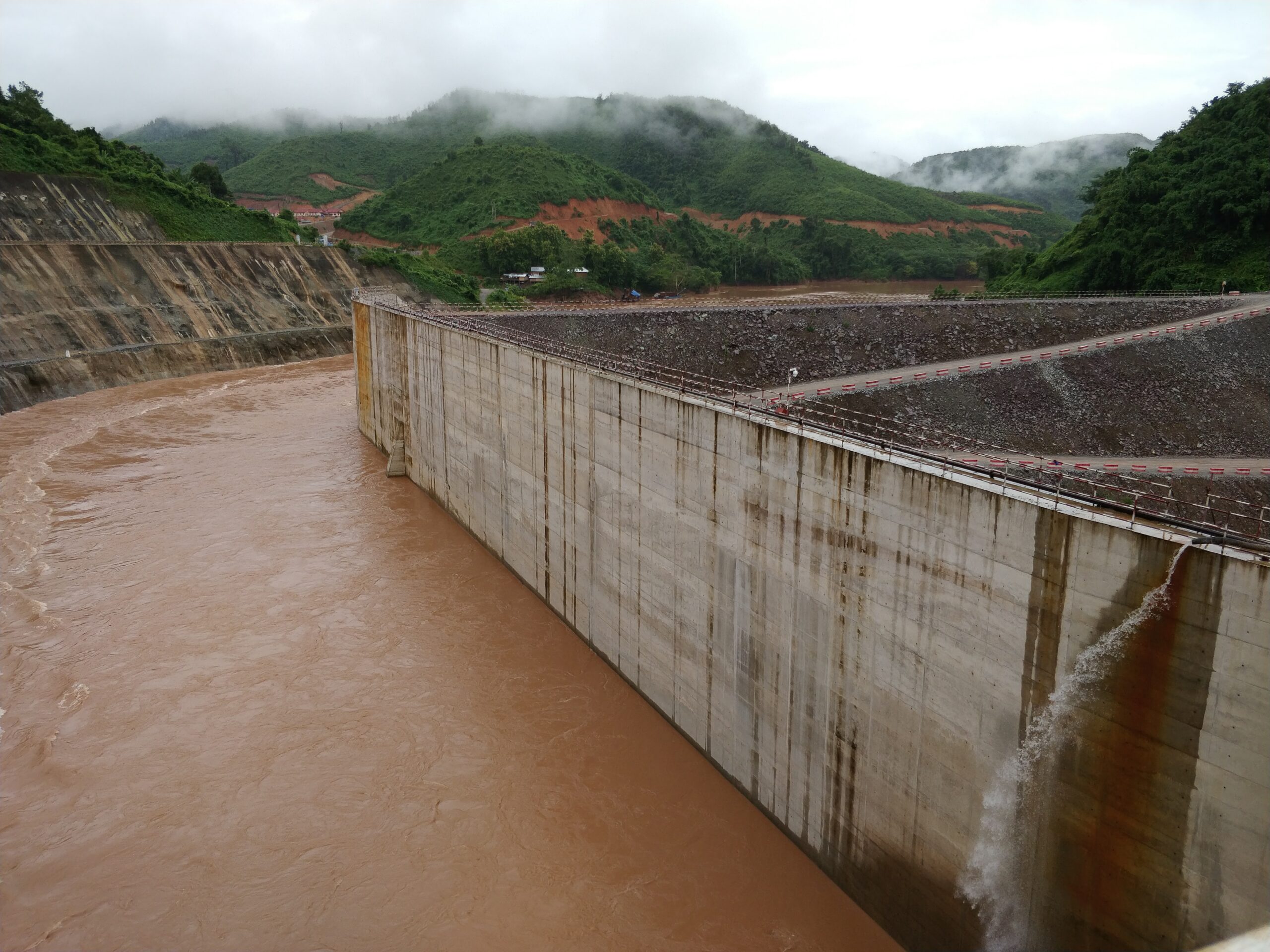
Executive Director of International RiversFeature image: An operating hydropower dam along the Nam Ou River Cascade in northern Laos, Southeast Asia. Photo: International Rivers