
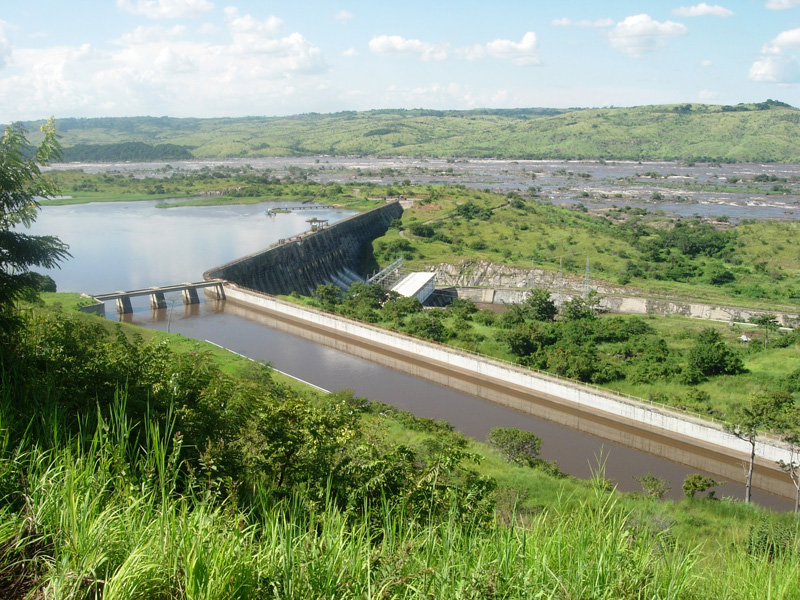
After Nepal’s hydropower disaster, we’re heading to Bangkok to make sure the Bank doesn’t repeat old mistakes on the Congo River.
This week, finance ministers, World Bank officials and civil society are gathering in Bangkok for the World Bank and IMF Annual Meetings (October 12–18). Hydropower is high on the agenda. August’s deadly flood in Nepal knocked out at least 15 hydropower projects, including the IFC-backed Upper Trishuli-1, and has raised hard questions about the risks of building big dams in vulnerable places. Yet the World Bank is ramping up its support for hydropower. Its new Approach Paper on Hydropower Development promises expanded investment and claims the Bank has the expertise to get it right. We’ve heard that promise before. And we know how it turned out.
The “model” dam that wasn’t
Twenty years ago, the World Bank held up Nam Theun 2 in Laos as proof that hydropower could be done right. Electricity sales to Thailand would fund poverty reduction. Displaced families would end up better off. Forests and wildlife would be protected. An unprecedented system of panels, monitors and consultations would make sure every promise was kept.
Here is what actually happened:
- About 6,300 Indigenous people were moved off their land. They got new houses and roads, but lost the forests, fields and fisheries that had sustained them.
- Tens of thousands of people along the Xe Bang Fai River saw their fisheries and riverbank gardens damaged when the dam more than doubled the river’s flows.
- By 2015, the Bank itself admitted that less than half of the project’s revenues could be fully accounted for.
- The Nam Theun 2 model was the first of more than 100 hydropower projects across Laos, helping drive a debt crisis that has gutted the country’s health and education spending.
- The protected area meant to offset lost habitat now has a gold mine operating inside it.
Same promises, now on the Congo River
Now the World Bank is back at Inga 3 in the Democratic Republic of Congo, a project that could reach 11,000 megawatts on the Congo River. In June 2025, the Bank approved a $250 million credit for the first phase of a proposed $1 billion Inga 3 Development Program. This phase doesn’t pay for the dam itself. But it lays the groundwork, sets up the institutions and moves forward decisions that will be very hard to reverse.
Once again, the promise is development.
Once again, the details tell a different story. Only about one in five Congolese people has electricity, yet most of Inga 3’s planned power has been earmarked for mining operations in Katanga and for export to South Africa. Up to 20,000 people or more could be displaced, many of them families who were already uprooted by the earlier Inga dams and who still lack electricity today. And our analysis finds that, under the most likely scenario, Inga 3 could cost the DRC around $618 million a year, or nearly $22 billion over 35 years.
Five lessons the Bank must learn before Inga 3
Our new policy brief, Same Promises, Same Flaws: Nam Theun 2 and Inga 3, sets out five lessons from Nam Theun 2 that should shape every decision on Inga 3:
- Selling electricity doesn’t guarantee poverty reduction.
- Conditions and oversight are no substitute for accountable governance.
- Consultation must give communities real influence over decisions.
- Environmental and social risks must be assessed before commitments move forward.
- New infrastructure doesn’t guarantee restored livelihoods.
We’ll be in Bangkok to make the case
International Rivers will be at the Annual Meetings to bring these lessons straight to the people making the decisions. Our delegation includes Bruce Shoemaker, who co-authored the brief with International Rivers, and has followed Nam Theun 2 for more than two decades and co-edited Dead in the Water, the definitive account of the project’s legacy.
Join us!
-
Nov 18
Webinar: The Tapajós Basin in Focus: Launch of an Interactive Digital Map – A Collective Construction of Knowledge
Date: 18 November 2026Time: 11:00 AM – 3:30 PM (UTC-3)Format: Online About the event: The primary objective of this webinar is to introduce the Interactive…
Wednesday, November 18, 2026 Online
Siziwe Mota
Africa Program DirectorFeature image: Inga 1 Project