
November 2025 – Environmental defenders are on the frontlines of the climate crisis, yet across the world they face escalating threats—from violence and criminalization to exclusion from decisions that shape their futures. In a recent report to the UN Human Rights Council, the UN Special Rapporteur on Human Rights Defenders said: “In their struggle to keep control of the narrative around climate action, States are repressing the voices of the exact people they should be working alongside.”
Vietnam’s Climate Prisoners
Emblematic of these threats, in Vietnam, six high-profile climate leaders and energy experts have been arrested and imprisoned since 2021 on politically motivated charges after advocating for Vietnam’s transition away from coal. They include: climate activist Hoàng Thị Minh Hồng, founder of CHANGE Vietnam; Ngụy Thị Khanh, a Goldman Environmental Prize winner and founder of Green Innovation and Development (GreenID); and environmental lawyer Dang Dinh Bach, who remains in prison.
These targeted arrests have taken place alongside Vietnam’s high-level commitments to address climate change in international forums, including its goal to achieve net zero by 2050 and implement a just energy transition. Vietnam’s vague tax laws are being weaponized to silence environmental defenders through arbitrary enforcement and disproportionately harsh penalties for those working on energy and environmental issues. While several of those imprisoned have since been released following international pressure, the arrests and forced closure of organizations have had a wider chilling effect on individuals and civil society organizations working on climate and energy issues in the country.
The Case of Đặng Đình Bách
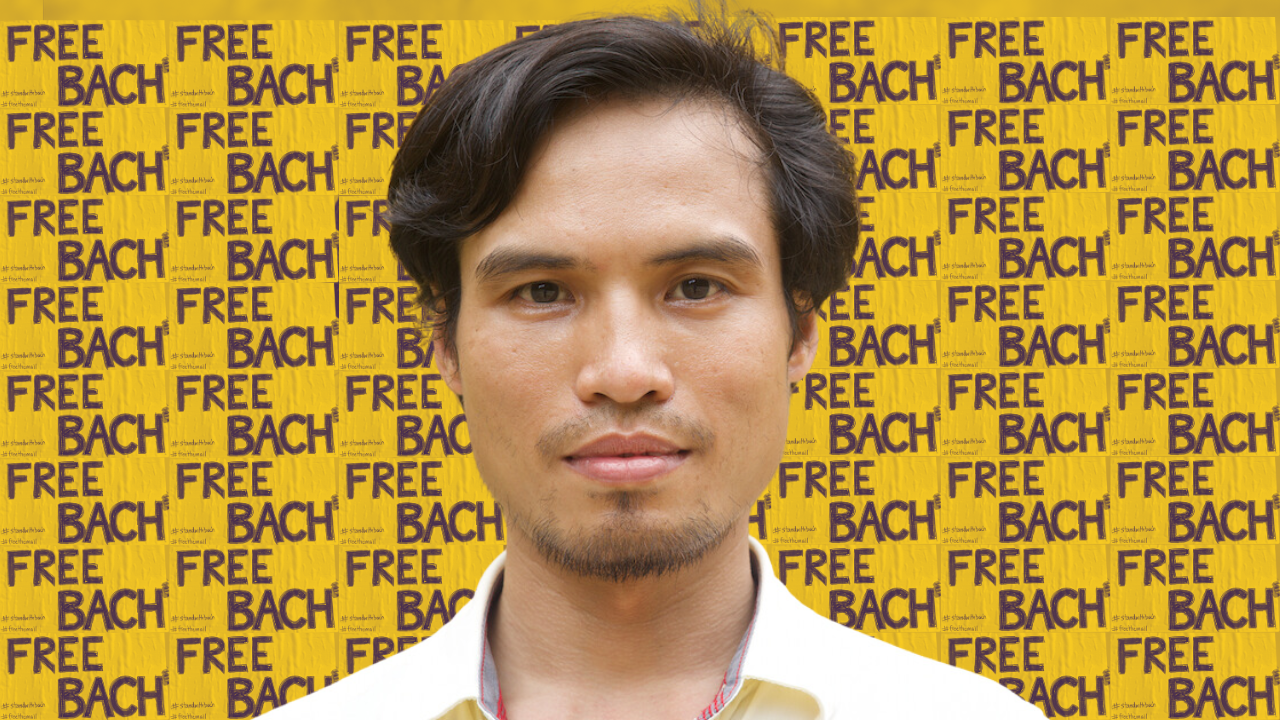
Đặng Đình Bách (“Bach”) is a prominent Vietnamese environmental justice lawyer who has spent over four years imprisoned on trumped-up charges of tax evasion. Bach is the former Director of the Center for Law and Policy of Sustainable Development (LPSD), a public interest law firm that advised communities facing industrial pollution, coal plants, and hydropower displacement. He was arrested on June 24, 2021, following involvement in a high-profile campaign to shift the country away from reliance on coal. He was sentenced in a closed trial on January 24, 2022, to five years in prison. In May 2023, the UN Working Group on Arbitrary Detention found Bach’s arrest arbitrary and discriminatory, violating international law, and called for his immediate release.
Bach’s physical and mental health remain at risk due to harsh conditions, inadequate nutrition, and limited family communication. He has conducted numerous hunger strikes in prison to protest the treatment of himself and other prisoners. Bach gained renewed global attention after being awarded the 2024 Roger N. Baldwin Medal of Liberty by Human Rights First, in recognition of his lifelong commitment to environmental justice and human rights.
An “Unjust” Energy Transition
Vietnam ranks among the world’s most climate-vulnerable countries while energy demand soars. The country is heavily reliant on coal and one of the fastest-growing emitters globally, making the energy transition both critical and urgent. International finance is flowing in support of the country’s energy transition, including through the US$15.5 billion Just Energy Transition Partnership (JETP) between Vietnam and the G7, EU, Denmark, and Norway. Despite stated commitments to consult with civil society and the public in the Political Declaration launching the JETP in December 2022, the persecution of climate leaders fundamentally undermines the “just” dimension of the JETP. International partners have issued statements of concern over the arrests and continue high-level dialogue with the Vietnamese government, but have not tied climate and energy transition financing to human rights improvements.
As of mid-2025, over $7 billion has been mobilized for Vietnam’s energy transition, with 24 “JETP-eligible” projects identified. Yet the criminalization of climate and environmental leaders, along with broader civic space restrictions, indicates that it is not safe for human rights defenders and community members to meaningfully participate, seek information, or raise concerns about climate and environmental issues or energy transition plans. Alongside other nations, Vietnam is scheduled to submit its updated Nationally Determined Contribution (NDC 3.0) at COP30 in Belém, which is expected to revise targets in alignment with the country’s commitment to net zero by 2050. Recent announcements emphasize a strong focus in the revised NDC on integrating public health objectives and international support to mobilize private sector investment and green finance.
Shrinking Civic Space
Recent legislative developments in Vietnam have increased government scrutiny, signaling accelerated state control and further civic space limitations. Decree 147 (2024) restricts freedom of expression by requiring social media companies and internet providers to suspend users and remove content deemed illegal within 24 hours. Decree 126 (November 2024) grants authorities greater power to control, monitor, suspend, and dissolve associations and their funding sources. In August 2025, the Prime Minister announced 47 draft laws for National Assembly approval, focusing on justice, criminal law, and cross-border cooperation that critics warn will further erode public debate and civil liberties.
Environmental Defenders at COP30
The Vietnam cases reflect a wider pattern of criminalization of environmental defenders, which is on the rise globally. Criminalization can include unfounded accusations and specious charges; arbitrary detention and lack of due process; stigmatization by government officials and national media; and the weaponization of ambiguous laws to impose restrictions on rights to assembly, association, and freedom of expression.
A direct response to the urgent reality faced by environmental defenders, the Leaders Network for Environmental Activists and Defenders (LEAD) will officially launch at COP30 as a platform to enable the protection and inclusion of environmental defenders in international negotiation and decision-making forums. LEAD brings together governments, environmental defenders, multilateral institutions, and civil society in a collaborative space designed to elevate defenders’ voices, experiences, and solutions.
The LEAD initiative will launch at COP30 through a series of events aimed at securing high-level political commitments, bridging climate and human rights agendas, and advancing a rights-based approach to environmental governance. Information on the series of events is available here.
More information on the Vietnam Climate Defenders and
Stand with Bach Campaigns, including how you can
lend support: www.standwithbach.org