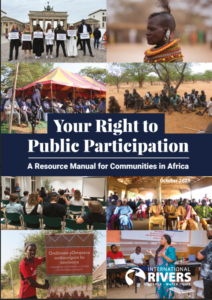
International Rivers has released a new Public Participation Resource Manual and accompanying Curriculum designed to equip African communities affected by large hydropower and other large-scale infrastructure projects with the tools to defend their rights and shape development decisions.
Developed by the International Rivers Africa Program, the materials offer practical guidance for indigenous peoples, women, farmers, fisherfolk, and other marginalized groups facing the social and environmental harms commonly linked to mega-dams. At the core of the manual is the principle of Free, Prior and Informed Consent (FPIC) — the right of communities to be fully informed and to agree to any project before it begins.
The report breaks down key legal protections, including UNDRIP, ILO Convention 169, and the African Charter, and explains how communities can use Independent Accountability Mechanisms of institutions like the World Bank and African Development Bank to challenge harmful projects. Real-world case studies from Namibia and Malawi illustrate how grassroots advocacy and legal action can influence outcomes.
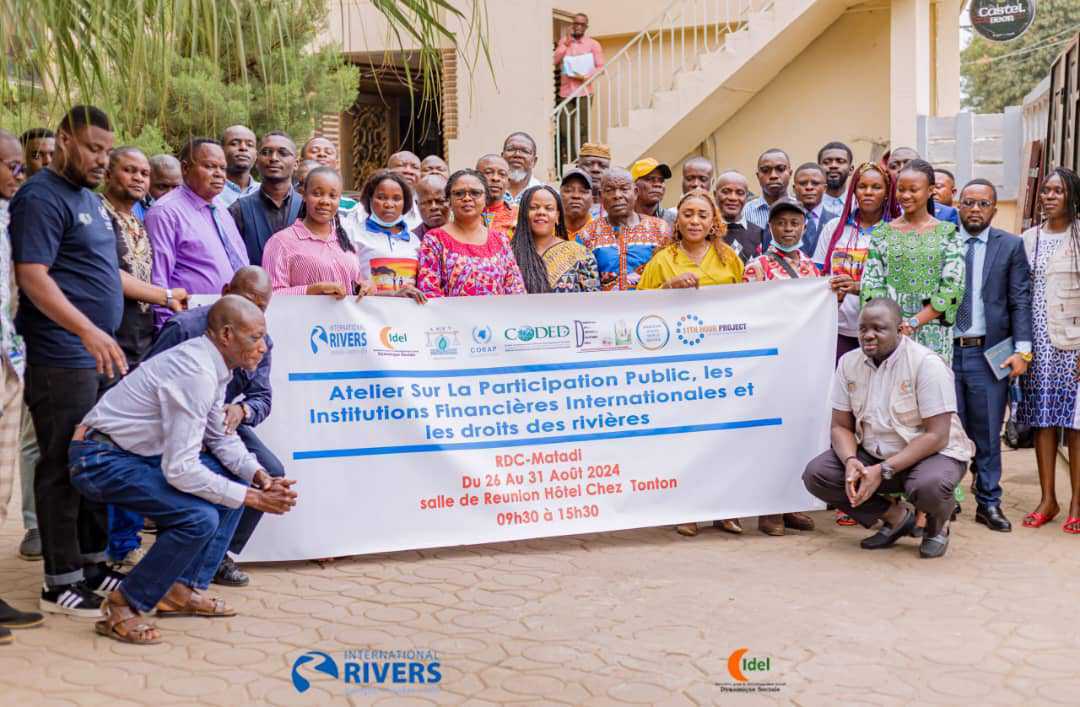
These resources were created by International Rivers are designed to put knowledge and power back into the hands of riverine communities in Africa. Refined through community workshops over a two-year period, these tools have provided, and will continue to provide communities with simple, practical guidance on how to participate in decisions that affect their land, rivers, and livelihoods. They have also deepened community understanding of Free, Prior and Informed Consent (FPIC), empowering people to stand up for their rights and to shape development to benefits both people and the environment.”
Siziwe Mota, Africa Program Manager at International Rivers
The new resources — available in English and French — provide step-by-step campaign tools, risk assessments, and guidance for building strong, community-led movements that demand transparency, accountability, and development that protects people and rivers.