

The Kunene River forms part of the border between Namibia and Angola and sustains the lands, livelihoods and cultural traditions of OvaHimba and OvaTjimba communities. For these Indigenous communities, their customary lands are more than a place to live, they encompass grazing areas, water sources, sacred sites and ancestral graves that connect generations and sustain their identity.
The proposed Baynes Hydropower Project is a joint development by Namibia and Angola on the lower Kunene River. It comprises a main dam, a regulating dam and associated roads and transmission lines. Affected communities fear that the project could permanently alter the river and their customary land, threatening pastoral livelihoods, cultural heritage and freshwater ecosystems.
Now their voices have reached Namibia’s Minister of Industries, Mines and Energy, Hon. Modestus Amutse. A delegation of leaders has handed a petition, carrying 2,011 signatures and over 500 online solidarity signatures to the Minister.
Community members say they have not been adequately informed or meaningfully consulted about the current project and have not provided their Free, Prior and Informed Consent. They are calling for transparent information, independent impact assessments, respect for customary land rights and rigorous consideration of less destructive alternatives.


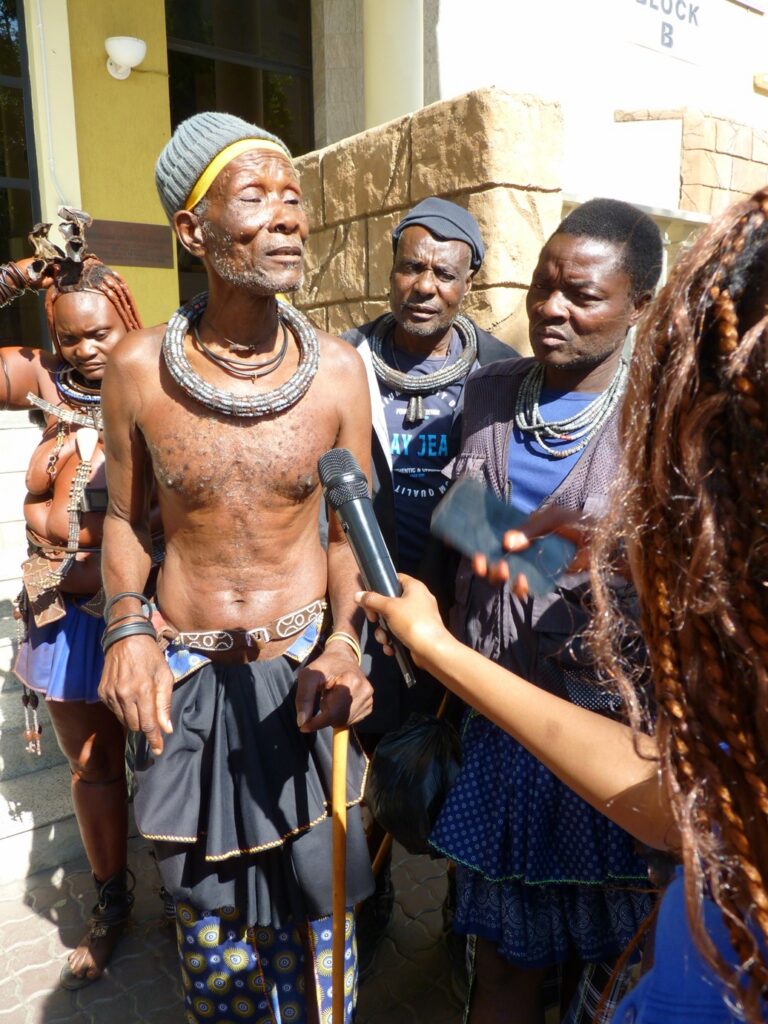
At the petition hand-over, Chief Mutaambanda Kapika conveyed the gravity of the communities’ concerns by invoking the historical genocide against the OvaHerero and Nama. He characterised the proposed dam as an existential threat to the OvaHimba, warning that the destruction of their ancestral lands, livelihoods and culture would threaten their survival as a people. This was a forceful expression of how the communities perceive the project’s consequences.
They are calling for all Baynes activities to be suspended until a genuine, inclusive process respects their rights and their own ways of making decisions. The Minister thanked the delegation and said their concerns would be considered.
“The governments and financiers must respect our Biocultural Community Protocol and engage directly with us before advancing a project that threatens our land, ancestral graves and grazing areas”
Chief Mutaambanda Kapika of the Ombuku Kapika Traditional Authority