
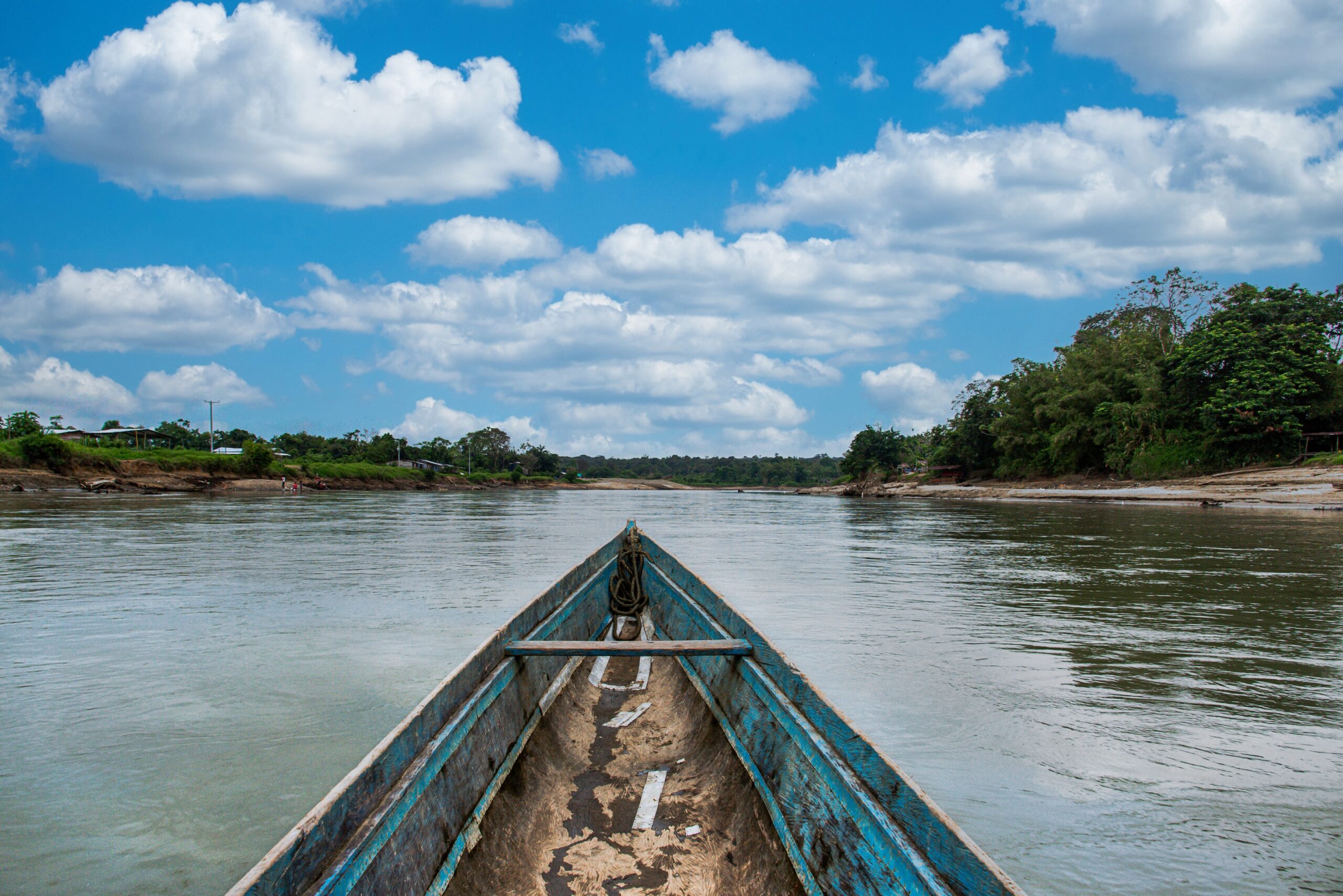
Civil society says the bill would transform Colombia’s landmark river rights decisions into a national legal framework for protecting, restoring, and governing rivers.
FOR IMMEDIATE RELEASE
August 3, 2026
Bogotá, Colombia – Environmental and social organizations today welcomed the introduction in the Colombian Congress of a 20-article bill – PL 140-2026 – that seeks to strengthen the protection of rivers as subjects of rights by providing the legal framework and institutional mechanisms needed to make those rights effective.
The initiative comes as many of Colombia’s rivers face mounting pressure. According to IDEAM and the Ministry of Environment and Sustainable Development’s Estudio Nacional del Agua 2022, the Bogotá River basin alone discharges over 259,000 tonnes of organic pollutant load each year, and 94 percent of its floodplain has been transformed by urban and agricultural development, among the highest rates of any river basin in the country. Colombia’s rivers have also been reshaped by hydroelectric development: fisheries researchers have found that dam construction in the Magdalena-Cauca basin has cut off river connectivity to floodplains by roughly a third compared to pre-dam conditions, putting a dozen or more endemic fish species at growing risk of extinction. The Ministry of Environment’s most recent official threatened-species list, published in 2024, includes dozens of freshwater fish among hundreds of threatened animals nationwide.
The initiative builds on Colombia’s internationally recognized legal leadership in the Rights of Nature movement, including the Constitutional Court’s landmark 2016 ruling recognizing the Atrato River as a subject of rights, subsequent judicial decisions protecting other rivers, and Congress’s 2024 law (Ley 2415) declaring the Ranchería River a subject of rights.
While these judicial and legislative recognitions have established important legal precedents, organizations note that each applied to a single river through a separate court ruling or act of Congress. Implementation has often been challenged by the absence of a comprehensive legal framework defining governance mechanisms, guardianship, institutional coordination, and long-term protection.
The new bill responds to that gap. Structured in 20 articles across five chapters, it recognizes all of the country’s rivers and other natural bodies of water as subjects of rights automatically once the law takes effect, without requiring a separate court ruling, administrative declaration, or prioritization act for each one. It creates a National Policy for the Protection of the Rights of Rivers and Other Bodies of Water, to be adopted within 24 months and led by the Ministry of Environment and Sustainable Development together with IDEAM, environmental authorities, and territorial entities, which will set science-based criteria for prioritizing the rivers in greatest need of reinforced protection, restoration, and monitoring. The bill also establishes a national methodology for defining environmental flows (caudal ecológico), the volume of water a river needs to sustain its ecological functions and biodiversity, and creates River Guardians (Defensores de los Ríos), participatory bodies that will represent, monitor, and help defend the rights of prioritized rivers in coordination with environmental and territorial authorities. A dedicated program to restore rivers and water ecosystems affected by Colombia’s armed conflict rounds out the framework.
Supporters say these measures—automatic recognition, a National Policy for the Protection of Rivers’ Rights, ecological flows, and River Defenders for priority basins—provide the legal and institutional framework needed to make rivers’ rights effective, strengthen public participation, and support long-term river protection, restoration, and governance.
Colombia has already shown global leadership by recognizing individual rivers as subjects of rights. This bill takes the next step by creating a national framework to turn those rights into action through ecological flows, river restoration, public participation, and River Defenders. From Bocas de Ceniza, where the Magdalena meets the Caribbean, we know that what happens upstream affects communities downstream. Protecting and restoring rivers is essential to securing clean water, biodiversity, livelihoods, and a healthy future for all.
Liliana Guerrero, Executive Director of Bocas de Ceniza Waterkeeper
Around the world, countries are recognizing that rivers need stronger legal protection and better governance to safeguard freshwater, biodiversity, and the well-being of communities. As the global movement to recognize the Rights of Nature and the rights of rivers grows, Colombia has been at the forefront since the Constitutional Court recognized the Atrato River in 2016. This bill builds on that leadership by creating a comprehensive legal framework to protect, conserve, manage, and restore rivers for the benefit of present and future generations. This is not about preventing people from using rivers—it is about ensuring that the way we use them sustains their health and resilience, so they can continue providing clean water, food, livelihoods, and other essential benefits for people and nature.
Monti Aguirre, Latin America Program Director at International Rivers
Supporters of the bill emphasized that healthy rivers are fundamental to the well-being of millions of Colombians.
Recognizing rivers as subjects of rights is more than a legal innovation, it is a commitment to transforming the way we relate to water and nature. This bill represents an important step toward ensuring that those rights are effectively implemented through collaboration among institutions, communities, and civil society.
Juanita Ariza, Director of Red Nacional del Agua de Colombia
The Red Nacional de Ríos supports this bill as a fundamental step toward protecting Colombia’s rivers and watersheds. We look forward to engaging with Congress to strengthen the bill and ensure it reflects both the country’s ecological urgency and the realities of the rural, riverine, and urban communities that depend on healthy rivers. Protecting rivers means protecting the territories, cultures, and people whose lives are intertwined with them.
Herman Martínez Gómez, spokesperson for the Red Nacional de Ríos
PL 140-2026 will now begin its legislative process in Congress. Supporters hope it will benefit from broad and inclusive public participation through hearings and dialogue with Indigenous Peoples, Afro-descendant communities, campesino organizations, local communities, academia, environmental organizations, youth, water experts, government institutions, and representatives from productive sectors whose well-being and activities depend on healthy rivers. Such an inclusive process can help build a stronger and more widely supported law for the protection and restoration of Colombia’s rivers.
MEDIA CONTACTS:
Liliana Guerrero, Bocas de Ceniza, bocasdecenizawaterkeeper2@gmail.com
Monti Aguirre, International Rivers, monti@internationalrivers.org
Juanita Ariza, Red Nacional del Agua, contacto@rednalagua.co
Herman Martínez Gómez, Red Nacional de Ríos, hermanmartinezgomez@gmail.com