
Demystifying the Financiers Behind Mega-Dams
By Siziwe Mota – Africa Program Director
In late June, the city of Kinshasa became the center of critical reflection and strategy for African civil society organizations and community representatives opposing the high costs of large hydropower projects. Hosted by International Rivers, a two-day workshop brought together NGO and community partners from Namibia, Guinea, and the Democratic Republic of Congo to better understand the financial institutions behind these megaprojects and how communities can hold them accountable for the harms their projects impose.
International Financial Institutions (IFIs) such as the World Bank Group and the African Development Bank, alongside public financial institutions like major Chinese state-owned banks, have long been key financiers of dam projects in Africa. These actors have often tried to justify their role in financing large infrastructure, particularly hydropower, falsely framing their investment as “essential for development.” However, the lived realities of frontline communities tell a different story. These mega-dam projects are associated with severe social and environmental consequences: forced displacements, loss of livelihoods, ecological degradation, and economic burdens due to high construction and transmission costs.
In light of these realities—and the recent World Bank approval of funding for the Inga 3 dam in the DRC—supported by partners from Accountability Counsel, Inclusive Development International (IDI) and Lumière Synergie pour le Développement (LSD)—the workshop aimed to deepen participants’ understanding of how these banks operate and how to engage them through effective advocacy and their accountability mechanisms. The meeting produced a statement signed by organizations across the Africa region calling on the World Bank to reconsider its funding of Inga 3
“This workshop allowed me to understand the international financial landscape. In other words, how IFIs finance large projects, especially in Africa. Aside from that, the workshop enabled me to understand the accountability complaint mechanism to support communities, ”said Serge Ngimbi of the Initiative pour le Développement Local (IDEL).
Laying the Groundwork for a Continental Movement
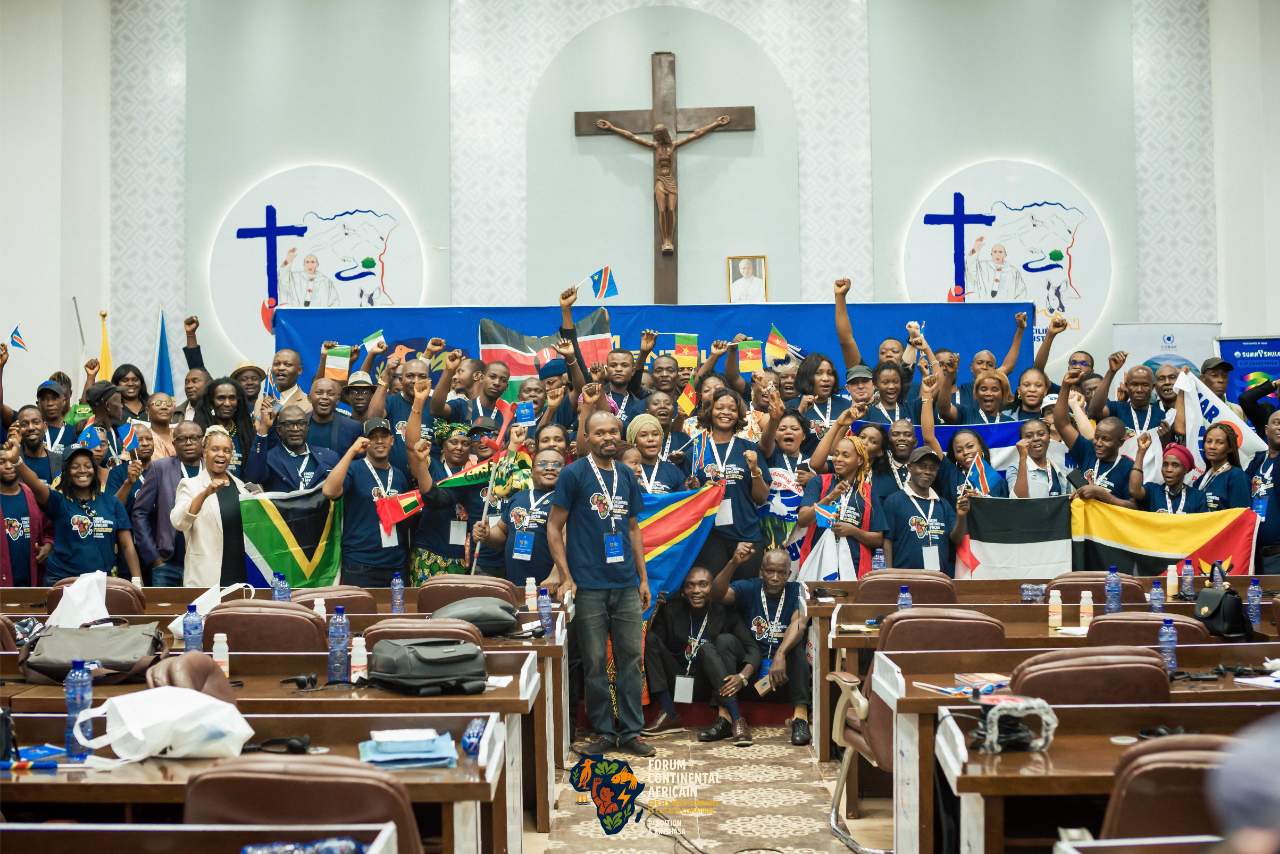
In the same week, the 1st African Continental Forum on Mega-Dams and the Climate Crisis was held. This served as a springboard for mobilizing a wider African movement in the lead-up to the IV International Meeting of Communities Affected by Dams, to be held in November 2025 in Belém do Pará, Brazil.
This forum succeeded in:
- Strengthening solidarity among communities across Africa impacted by mega-dams
- Sharing strategies and lessons learned from grassroots resistance efforts from within Africa and from Latin America
- Developed actionable recommendations for civil society and affected communities
- Drafted and adopted a unified African declaration on mega-dams and the climate crisis.
Throughout the gathering, participants emphasized the importance of free, prior, and informed consent (FPIC) in development processes, voicing their desire to be included in projects that directly affect their communities.
“As we reflected on the implications of mega dam projects across the African continent and beyond, it is critical to emphasize that development must not come at the cost of exclusion, displacement, and ecological destruction, “noted Alphons Kahuhu Koruhma of the Kaoko Epupa Development Foundation. “In addition, there is an urgent need to build a global movement that amplifies the voices of communities most affected by mega dam projects.”
A declaration of the 1st African Continental Forum on Mega-Dams and the Climate Crisis was adopted, which called on African governments and dam project funders to disengage from all large dam projects, and to promote decentralized access to renewable energy to foster equitable local development and enable effective action against climate change.
“We need to strengthen our strategies to fight against false solutions that represent major threats to biodiversity, to the social fabric of communities, to the economy, and to future generations,” added Emmanuel Musuyu of the Coalition des Organisations de la Société Civile pour le Suivi des Réformes et de l’Action Publique (CORAP). “Not only was an African declaration adopted, but an African movement was born in Kinshasa.”
Toward Continued Solidarity
A unified African movement emerged, committed to challenging harmful megaprojects and advocating for development that upholds human rights, environmental integrity, and social justice. Through knowledge exchange and solidarity, the participants left Kinshasa more equipped to challenge harmful development projects and advocate for true climate and social justice.
As the continent faces escalating climate risks and development pressures, these voices are not just resisting—they are building a movement from the ground up.