
Background
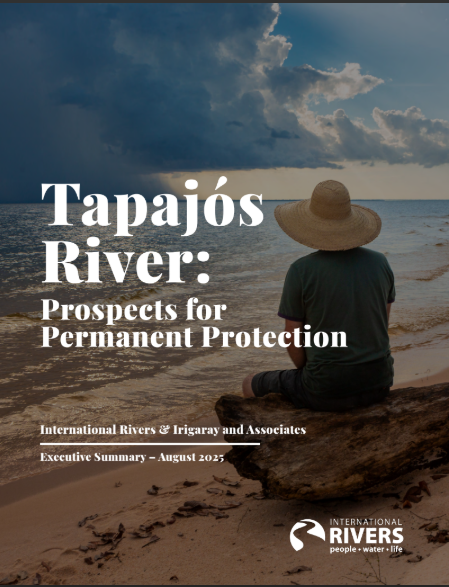
In a new study, International Rivers and Irigaray e Associados, Análise Juridica da Legislação Ambiental Brasileira, reveal a potentially transformative legal approach to protecting Brazil’s Tapajós River, revered by Indigenous communities as the “River of Life.” Despite its immense cultural and ecological value, the river basin is increasingly threatened by widespread illegal gold mining, which contaminates its waters with mercury, and by an expansive agenda of hydroelectric dam construction that fragments critical ecosystems. For the Munduruku people, who have sustainably stewarded these lands and waters for generations, the impact is severe: every community member tested shows signs of mercury contamination, with children facing the gravest health consequences.
The study highlights the urgent need for an alternative approach to Brazil’s enforcement mechanisms, such as the legal recognition of rivers as entities with inherent rights. It also discusses promising new mechanisms, such as dedicated conservation categories for rivers, a river rights law for the Lajé River, and national river protection legislation under discussion in Congress. As these complementary legal frameworks—spanning state-level conservation units, municipal river personhood, and federal recognition—converge, the Tapajós River stands at a critical crossroads: it could become a global model for integrated river protection, or face irreversible ecological and cultural collapse.
Tapajós basin in numbers
493,000 km²
is the total area of the Tapajós River basin, spanning across three states
+300 fish species
depend on the Tapajós basin
+2,000 gold mines
poison its waters illegally with mercury
4 tributaries
Teles Pires, Juruena, and Jamanxim rivers, plus the blackwater Arapiuns River that drains sandy soils near the Amazon confluence.
180 hydroelectric projects
have been identified only in the Juruena River basin, where 37 currently operating.
+60%
Munduruku are carrying unsafe concentrations of mercury.
A glance at the highlights of the study:
The study presents key insights, detailed analysis, and real-world examples to inform, inspire, and guide action, including:
- Despite Brazil’s extensive legal framework for environmental and indigenous rights, persistent failures in implementation and enforcement, and loopholes such as the Security Suspension Law, have led to unchecked environmental degradation in areas like the Tapajós River basin.
- A new law in the state of Pará, which establishes Rivers of Special Protection as a new conservation category, offers a promising pathway for protecting rivers throughout the Tapajós Basin. Part of a comprehensive conservation framework, the law emphasizes ecosystem preservation, biodiversity, and cultural and economic values while regulating harmful activities like mining and aquaculture to ensure long-term river integrity.
- The legal recognition of rivers as subjects of rights, exemplified by an innovative law recognizing the rights of the Lajé River, coupled with bottom-up community engagement and top-down legal reform, offers an innovative and holistic approach to river protection that moves beyond traditional regulatory responses.

Full report, Executive Summary, and Press Releases
From people to people: International Rivers’ report methodology
To build this new report, International Rivers brought together representatives from Indigenous organizations and traditional, riverine, and urban communities, from the lower, middle, and upper regions of the Tapajós Basin.
At the two meetings, the leaders shared their experience with some of the latest threats and ongoing socio-environmental impacts of large-scale development, which have directly affected their lives. Learn more about the gatherings organized by International Rivers.
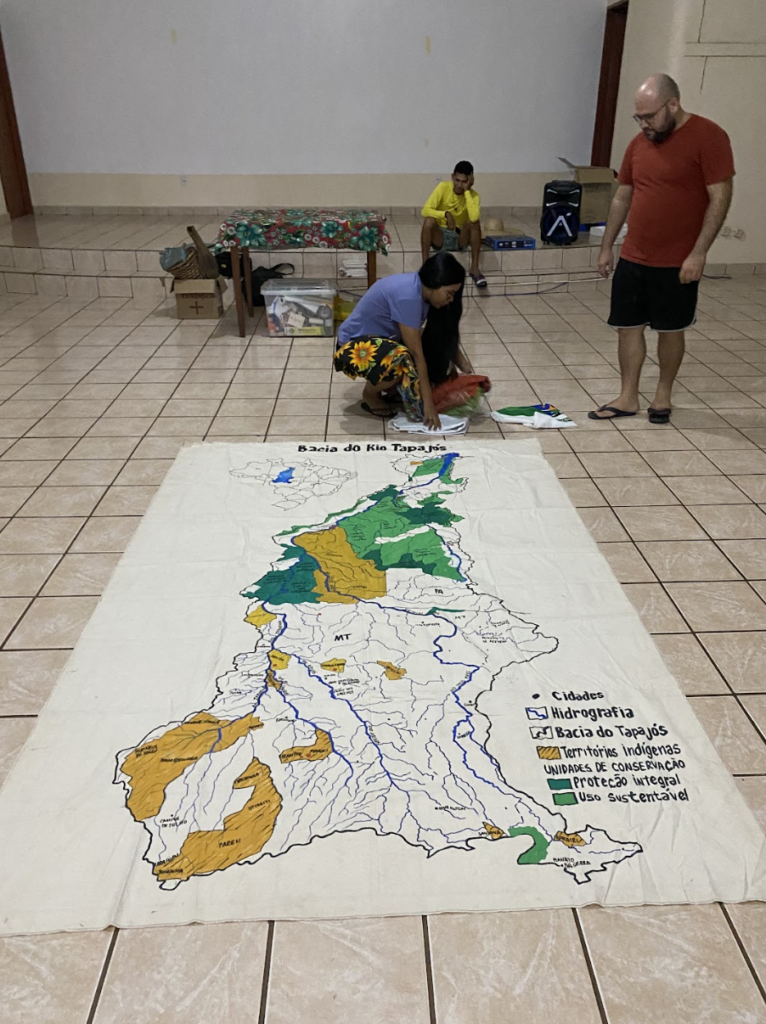

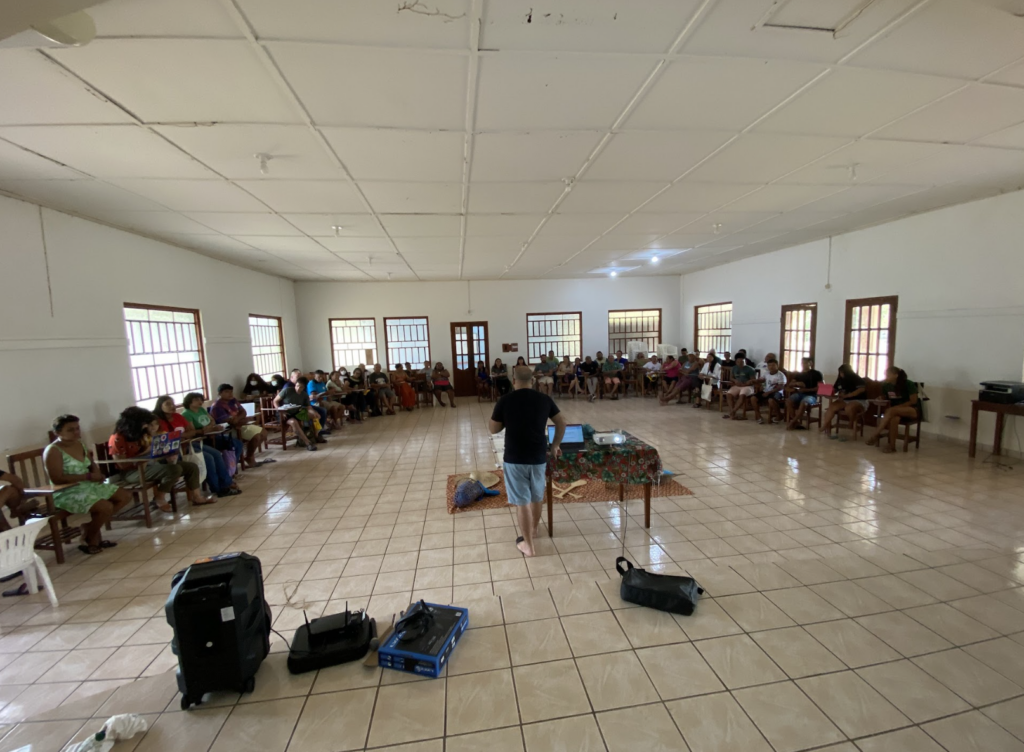

“The human rights of those who rely on the Tapajós River Basin are inextricably connected to the health of the river itself. Without decisive action, the Tapajós risks becoming another casualty of reckless development, where short-term economic gains are prioritized over long-term ecological, social, and cultural sustainability. With coordinated strategic approaches, genuine community partnership, and innovative legal frameworks, Brazil can transform the Tapajós from a symbol of environmental crisis to one that symbolizes respect for human rights and nature.”
Flavio Montiel, Brazil Program Manager at International Rivers
Have questions about this work or how you can get involved?
We’d love to hear from you.
Special thanks to the FILE Foundation for supporting this initiative. © 2025 All rights reserved.