Sinohydro Corporation
China's Leading Hydropower Dam Company
Sinohydro Corporation is China's leading dam builder, having built 65% of China's hydropower capacity. Sinohydro is involved in constructing many controversial big dams within China, such as China’s Three Gorges Project, Xiluodu and Xiangjiaba on the upper Yangtze River (aka Jinsha River), the Xiaowan dam on the upper Mekong River, the Jinping dam on the Yalong River, and the Laxiwa Dam on the upper Yellow River.
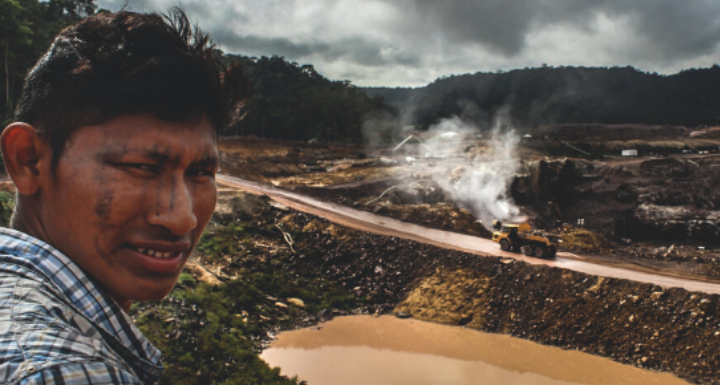
Now, Sinohydro is "going out," building dozens of big dams overseas. Media and International Rivers' civil society contacts report that many of these projects not meet basic social and environmental standards.Sinohydro's overseas projects include the Merowe Dam in Sudan, which has displaced thousands, and the Bakun Dam, which will flood important rainforest in Sarawak and harm indigenous rainforest dwellers. Sinohydro is also building the Bui Dam in Ghana, and several projects in Laos and Burma, as well as a growing roster of projects in South Asia.
Sinohydro's reach is expandng. The company will likely be a major player in plans to dam the Mekong River in Southeast Asia and the Gibe IV dam on the Omo River in Ethiopia. Sinohydro may seek to build the world's largest hydropower project - the Grand Inga Dam in Congo. In total, Sinohydro is building, plans to build, or has built some 107 dam projects in 49 countries outside of China (as of December 3, 2010). Africa is a key market for Sinohydro, which contributes 44% of Sinohydro's overseas revenue, followed by Asia at 33%, the Middle East at 22% and South and Central Americas at 1%.
Sinohydro is a state-owned enterprise (SOE), subject to the rules and regulations of China’s State Council and its State-owned Assets Supervision and Administration Committee (SASAC). SASAC has urged SOEs to show leadership in social responsibility, including environmental protection. (See International Rivers' New Great Walls, a Guide to China's Overseas Dam Industry for more on laws and regulations pertaining to SOEs and other dam building companies in China.)
International Rivers and our partners in Sinohydro dam-affected communities have urged Sinohydro to adopt an environmental policy reflecting international best practice and to engage in a dialogue with civil society in the host countries of its projects. In summer, 2009, Sinohydro responded to International Rivers' request to meet to discuss the company's social responsibility efforts.
Sinohydro and Corporate Social Responsibility
Over the past five years, Sinohydro has demonstrated an increasing sensitivity to projects with environmental, safety and social issues. Sinohydro is seeking to build its reputation as an leader in the international market. In an interview with the hydropower industry publication, Global Power Report, the Vice President of Sinohydro - Huang Baodong said that opposition to hydropower projects around the world has made the company more cautious while bidding for project. "We now bid for projects which have the approval of either the World Bank or the Asian Development Bank" Mr Baodong said.
Recognizing Sinohydro's impact on communities and environments around the world, in 2009 International Rivers invited Sinohydro to start a policy dialogue on its overseas activities. As part of this dialogue, Sinohydro has committed to complying with the standards imposed by Chinese laws and regulations when it acts as a project developer.
Sinohydro does not have a common environmental policy across its 19 subsidiary companies and 9 holding companies. In March 2010, Sinohydro informed International Rivers that it was developing a group-wide environmental policy. International Rivers has made recommendations regarding the environmental policy, including that if Sinohydro wants to be a leading international company, it must adopt an environmental policy of the highest international standards. This policy had yet to be finalized.
Sinohydro views differentiated levels of responsibility depending on whether it is acting as a contractor or a project developer. When Sinohydro acts as a project developer it appears to undertake a higher level of responsibility for mitigating environmental impacts, implementing resettlement plans, community development activities coupled with greater transparency and disclosure. However, when acting as a contractor, Sinohydro has been quick to diminish its responsibility and refer environmental and social impacts as a matter for the developer and the host country government.
Sinohydro's participation in the development and adopting of the China's International Contractors Association's guidelines on social responsibility create some baseline environmental and social standards in the absence of a public environmental policy. However, the environmental and social commitments contained in the industry guidelines are broad and vague.
What you can do - tactics and strategies for engaging Sinohydro
- Sinohydro wants to be seen as a responsible company. Contacting company representatives directly (through a letter, phone call or visit) may be an important way to get your message across. We have also found it effective to contact Sinohydro's International Department directly at the Beijing headquarters. Letters may also be more effective if they are copied to your local Chinese embassy and the Chinese Ministry of Foreign Affairs.
- Familiarize yourself with the China's Overseas Project Contracting Industry guidelines on social responsibility. In the absence of any public company environmental or social policies, this forms a minimum performance standard.
- Sinohydro has committed to using the Chinese standards where the laws and regulations in the host country are lower or non-existent when it is the dam developer. Review your countries environmental and resettlement laws and compare them with Chinese laws to determine whether this commitment may apply to your project.
Contacting Sinohydro
Company Spokesperson: Wang Zhiping
Position: Office of the General Manager
Email: huangjz@sinohydro.com
Phone: 13911856326