Hydropower Propaganda Disguised as Science
The International Energy Agency (IEA) advises industrialized countries on energy policy and energy security. For decades, the organization has been beholden to the oil, gas, nuclear and hydropower industries. A Technology Roadmap on Hydropower published recently by the IEA reads like a propaganda piece by the dam industry. It calls for increased government subsidies, and consistently downplays the impacts and risks of hydropower projects.
The IEA published its new hydropower report as part of a series of energy sector roadmaps. Hydropower is a long established technology, and produces almost one sixth of the world’s electricity. The report asserts that the technology generates “much more [electricity] than wind, solar, geothermal and other sources combined,” and will remain “the major renewable electricity generation technology worldwide … for a long time.”
With thousands of projects built in past decades, hydropower still generates much more energy than renewable sources. Yet when it comes to creating new capacity to mitigate climate change, wind and solar energy have overtaken hydropower. In 2011, for example, 40 gigawatts of wind and 30 gigawatts of solar capacity came online, compared to 25 gigawatts for hydropower. The IEA, which has neglected renewable energy sources for years, is silent about this trend.
The IEA predicts that hydropower capacity will roughly double to 1,947 gigawatts by 2050. This would require the construction of thousands of new large dams. The biggest increases are expected to occur in China and other Asian countries and – at a much lower level – in Africa.
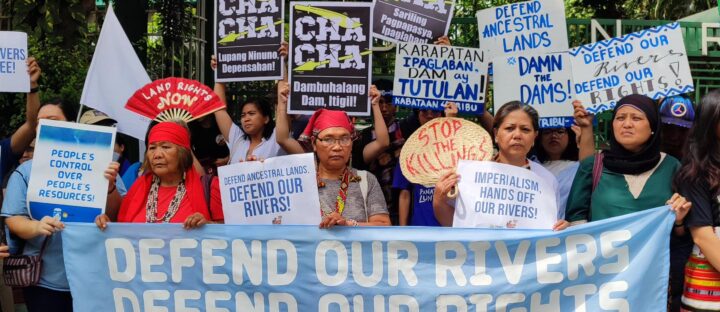
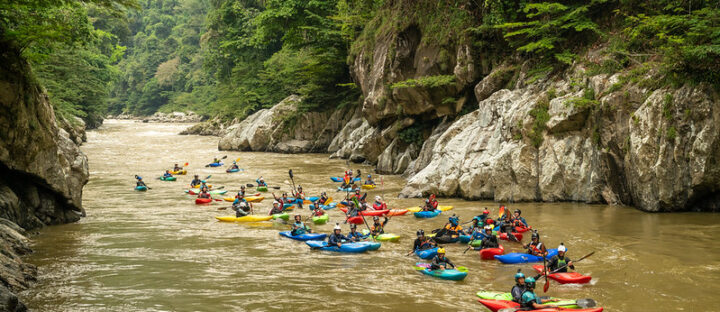
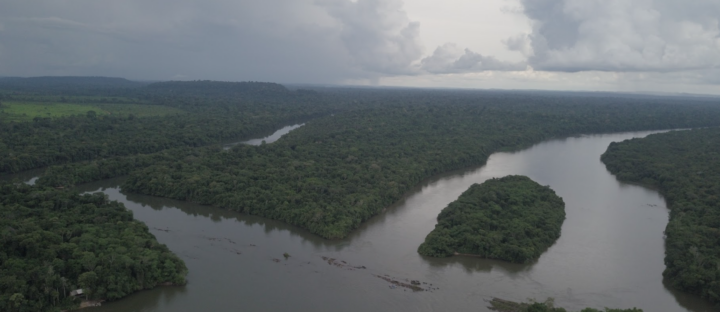
Dams ravage floodplains which are among the richest and most productive ecosystems on Earth. Freshwater systems such as rivers, wetlands and lakes are already more seriously affected by species extinction than any other major ecosystem, and dams are one of the main reasons for this. You would expect that a roadmap for the global expansion of hydropower would assess how much more damming freshwater ecosystems can absorb before they collapse. Yet the IEA skirts this question.
The new report acknowledges that hydropower plants “may significantly affect natural aquatic and terrestrial habitats.” Yet it asserts, without elaboration, that “all these effects can be mitigated by thorough flow-management programmes.” This contradicts the empirical evidence of the independent World Commission on Dams, which found that efforts to mitigate (rather than avoid) the environmental impacts of dams have usually failed.
The most attractive locations for dams have already been used, and doubling hydropower capacity would likely require the displacement of scores of millions of people. The report does not address the widespread impoverishment and misery that dam displacement has caused. Again without elaboration, it claims that “with careful planning and implementation these issues can be avoided, minimized, mitigated or compensated.”
The IEA report also downplays the amount of greenhouse gases produced by hydropower projects. Shallow tropical reservoirs can emit more greenhouse gases – particularly methane – than thermal power projects with an equal output of electricity. A peer-reviewed research paper estimates that such reservoir emissions may amount to 4% of all human climate impacts. The IEA report simply states that “some hydropower plants could contribute to GHG emissions.” It proposes measuring these emissions, but excludes the large emissions from deforestation caused by dam building in pristine forests.
The more intense droughts brought about by climate change will reduce the economic viability of hydropower dams, and the escalating floods will affect their safety. The new publication acknowledges that climate change can have “substantial” impacts on hydropower projects, but does not assess how these long-term changes will affect their economics. This puts a fundamental question mark behind the report’s ambitious expansion targets.
More than 40 countries – including the US, China, India and Brazil – offer subsidies and other incentives for hydropower projects. The IEA report proposes to expand such government support. Its recommendations include:
- All countries with hydropower potential should prepare inventories, set targets for new projects and track their implementation.
- Since neither the public nor private investors are keen on dam building, governments should “promote public and private acceptance of hydropower.”
- Governments should “develop effective financial models to support the large number of appropriately sized hydro projects in developing regions.”
- Governments should “streamline administrative processes [which include environmental assessments] to reduce the lead time for hydropower projects.”
- Developers should follow sustainability guidelines and protocols, and “avoid, minimize, mitigate or compensate negative socio-economic and environmental impacts.” Yet the report does not even mention the framework of the World Commission on Dams, which provides the strongest guidelines on dam building.
The International Energy Agency has a long record of boosting conventional energy sources at the cost of renewables. Based on an analysis of forecasts about the development of wind power, the Energy Watch Group found in 2008 that the IEA was “by far the leading issuer of faulty predictions.”
The new report was prepared in close cooperation with the hydropower industry. The IEA authors consulted 34 experts for the publication, 29 of which work for hydropower companies and other institutions promoting the technology. It is no surprise that an industry lobby would prepare a biased and unscientific report. It is less clear why the IEA’s member governments would pay for and legitimize such a piece of propaganda.
Peter Bosshard is the policy director of International Rivers. He blogs at www.internationalrivers.org/en/blog/peter-bosshard and tweets at www.twitter.com/PeterBosshard.


Comments
Hydropower Propaganda Disguise as Science
First let me ask the writer, What is Science? It became a fashion, what we write is science and others not so. The World Commission on Dams was prepared at the behest of World Bank. So, we consider this as science. The group that are associated with this consider this publication as gosple. So they say no to dams, no to hydropower, no to interlinking of rivers and say that such acts will effect the river biodiversity. Unfortunately this a false propaganda. In India rivers are polluted with chemical inputs agriculture technology since 1960 and later joined this the domestic and industrial pollution. These acts created dead zones in terms of biodiversity. In fact this lead the 70s environmental movement. To cover up the vested groups brought in global warming -- fossil fuel use -- greenhouse gases in place of climate change, a vast subject. UN under this guise appointed IPCC which created monstrous reports sensationalizing the global warming and its impacts. This was proved mischivous in December 2009 Copenhagen UN summit. IPCC withdrew some of their conclusions and later in November 2011 in its summary report water downed the impacts saying natural variations are far more important than the global warming based impacts. In fact this was shown in 1993 in my book. Now, the World Bank group propogating watersheds in place of dams -- without the dams India would not have solved the food security problem with non-linearly increasing population. Here the main issue is traditional agriculture - healthy food vs chemical input agriculture - unhealthy food but meets the greed of MNCs. By interlinking rivers, in real terms it improves the biodiversity in rivers. With the dams -- hydro power is a part -- it creates permanent biodiversity reserve under the polluted rivers. Through proper management of reservoirs it counters the droughts. Though hydropower share in USA is less over nuclear power, in India it is not so. About the methane theory, recently there are several such theories that lead to that fossil fuels are not important but methane is from other sources like dams, animal -- these are sensational reports to counter dams.
So, let us talk progmatically what is important to a country based on resources availability and not based on to served vested interests.
Dr. S. Jeevananda Reddy
the alternatives
The one alternative you have not addressed is the simplest one of all. Reduce the human population by 3 billion people. We could start by withdrawing health care services, ending vaccination programs and all food aid. A few cholera, typhoid, influenza and bird flu epidemics would help. By dramatically reducing the population we can significantly reduce the demand for electricity and the need to build dams. Is this any less preposterous than the utopian world you seek?
reply to Terry Clayton
That's a logical proposal, Terry but a morally reprehensible one. The proposal to invest in genuinely renewable energy, on the other hand, avoids the very immediate suffering brought about by most resettlement schemes (well documented by Cernea and others) and also the ecological devastation and greenhouse gas emissions that are associated with them. Promoting family planning would be a much less preposterous way of reducing population pressure.
What is renewable energy
To illustrate that International Rivers is a bankrupt thinking and corrupt organization, note that this article does not recognize hydropower as a renewable energy source. You can argue its impact on the environment, but there is no denying that it IS a renewable enery source!
Renewable in what sense?
Renewable in what Sense?
I disagree on hydropower dams destroy freshwater ecosystems but on the contrary it improves the ecosystem.
I also disagree with the notion of greenhousegases emission theory from hydropower reservoirs -- hydropower reservoirs help in the evaporation process that cools the atmosphere and the water used to irrigation creates the cool atmosphere.
In Andhra Pradesh, the rainfall show an increasing trend, more particularly in Coastal Andhra Pradesh, after the increase in irrigated agriculture and building up of reservoirs in this zone -- Dhavaleswaram barrage, Prakasham barrage, Nagarjunasagar dam, Srisailem dam, etc. The cooling effect. This trend is superposed on the 56- year cycle -- that is present in Andhra Pradesh precipitation -- All India Southwest Monsoon precipitation presents 60-year cycle; also global temperature, Hurricanes, etc follow this.
Dr. S. Jeevananda Reddy
Add new comment